Four Phases of Salvation April 2, 2024

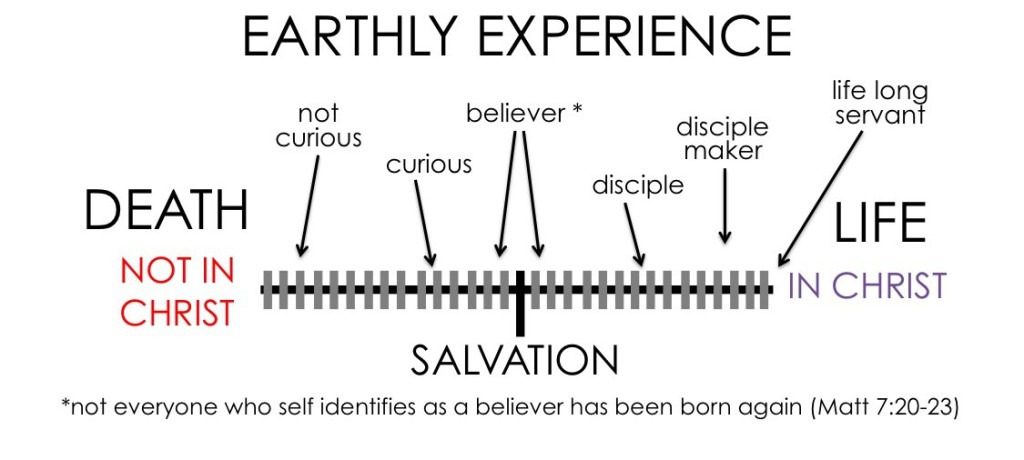
Four Phases of Salvation
Propitiation
ἱλάσκεσθαι (hilaskesthai)
Hebrews 2:17 NASB1995
Therefore, He had to be made like His brethren in all things, so that He might become a merciful and faithful high priest in things pertaining to God, to make propitiation for the sins of the people.
The word propitiation carries the basic idea of appeasement or
satisfaction, specifically toward God. Propitiation is a two-part act
that involves appeasing the wrath of an offended person and being
reconciled to him.
The necessity of appeasing God is something many religions have in
common. In ancient pagan religions, as well as in many religions today,
the idea is taught that man appeases God by offering various gifts or
sacrifices. However, the Bible teaches that God Himself has provided the
only means through which His wrath can be appeased and sinful man can
be reconciled to Him. In the New Testament, the act of propitiation
always refers to the work of God and not the sacrifices or gifts offered
by man. The reason for this is that man is totally incapable of
satisfying God’s justice except by spending eternity in hell. There is
no service, sacrifice, or gift that man can offer that will appease the
holy wrath of God or satisfy His perfect justice. The only satisfaction,
or propitiation, that could be acceptable to God and that could
reconcile man to Him had to be made by God. For this reason God the Son,
Jesus Christ, came into the world in human flesh to be the perfect
sacrifice for sin and make atonement or “propitiation for the sins of
the people” (Hebrews 2:17).
The word propitiation is used in several verses to explain what Jesus accomplished through His death on the cross. For example, in Romans 3:24-25
believers in Christ have been “justified freely by His grace through
the redemption that is in Christ Jesus, whom God set forth as a
propitiation by His blood, through faith, to demonstrate His
righteousness, because in His forbearance God had passed over the sins
that were previously committed.” These verses are a key point in Paul’s
argument in the book of Romans and are really at the heart of the gospel
message.
In the first three chapters of Romans, Paul makes the argument that
everyone, Jew and Gentile alike, is under the condemnation of God and
deserving of His wrath (Romans 1:18). Everyone has sinned and fallen short of the glory of God (Romans 3:23).
All of us deserve His wrath and punishment. God in His infinite grace
and mercy has provided a way that His wrath can be appeased and we can
be reconciled to Him. That way is through the sacrificial death of His
Son, Jesus Christ, as the payment for sins. It is through faith in Jesus
Christ as God’s perfect sacrifice that we can be reconciled to God. It
is only because of Christ’s death on the cross and His resurrection on
the third day that a lost sinner deserving of hell can be reconciled to a
holy God. The wonderful truth of the gospel is that Christians are
saved from God’s wrath and reconciled to God not because “we loved God,
but that He loved us and sent His Son to be the propitiation for our
sins” (1 John 4:10).
Jesus said, “I am the way, the truth, and the life. No one comes to the Father except through Me” (John 14:6).
The only way for God’s wrath against sinful man to be appeased and for
us to be reconciled to God is through Jesus Christ. There is no other
way. This truth is also communicated in 1 John 2:2,
“And He Himself is the propitiation for our sins, and not for ours only
but also for the whole world.” An important part of Christ’s saving
work is deliverance from God’s wrath; Jesus’ propitiation on the cross
is the only thing that can turn away God’s divine condemnation of sin.
Those who reject Christ as their Savior and refuse to believe in Him
have no hope of salvation. They can only look forward to facing the
wrath of God that they have stored up for the coming day of judgment (Romans 2:5). There is no other propitiation or sacrifice that can be made for their sins.
https://www.gotquestions.org/propitiation.html
-------------------------------------------------------------------------
Justification
God’s Word clearly teaches the precious doctrine of justification by faith alone. All who believe “are justified by his grace as a gift, through the redemption that is in Christ Jesus, whom God put forward as a propitiation by his blood, to be received by faith” (Rom. 3:24–25). While this doctrine is of tremendous theological importance and can be a subject of deep scholarly study, here are five truths all God’s people should know about the doctrine of justification.
1. Justification is a wonderful comfort.
First, we should know the wonderful comfort of this doctrine. Justification reminds us that Jesus Christ has done everything necessary for our salvation. He paid the penalty that our sins deserved by His sacrificial death on the cross. His death satisfied God’s justice and turned away His wrath from us. Jesus also lived a perfect life by His righteous obedience to God’s law. Both Christ’s satisfaction and His perfect righteousness are imputed to us by grace through faith. Therefore, all believers should take comfort in knowing that the Father looks upon us in Christ as if we had been as sinless and as perfect as Jesus is.
2. Justification brings supreme blessing.
Second, we should know the supreme blessing God bestows upon us in justification. By grace through faith, we are righteous before God and heirs to eternal life. The blessing of eternal life has been conveyed upon us now, just as Jesus promised: “Whoever believes in the Son has eternal life” (John 3:36). Eternal life is a particular kind or quality of life. Eternal life means the perfect blessedness of hearts that rightly love God, minds that truly know Him, and wills that completely follow Him. Already the beginning of this new and eternal life dwells in us. We are heirs who have spiritually received eternal life as our inheritance now. And one day soon, when Jesus returns in glory, we will experience eternal life fully, body and soul. Jesus bestows upon us the eternal life of perfect and indestructible fellowship with God. We should celebrate the supreme blessing of eternal life enjoyed by those who are justified by faith.
3. Justification means present peace with God.
When we keep these blessings in mind, they lead us to a third truth regarding justification: the present peace we have with God. In Christ, all of our obligations to God have been met. Nothing stands unaccounted for between us and God. But the reality of this peace can be very hard for a sinner to accept. Casper Olevianus, one of the authors of the Heidelberg Catechism, wrote “there is nothing more difficult than to believe the forgiveness of sins.” But if we do not believe we are truly forgiven, we will not believe that we have peace with God. Dr. R.C. Sproul put it well: “It is often a difficult thing to accept the grace of God. Our human arrogance makes us want to atone for our own sins or make it up to God with works of super-righteousness. But the fact of the matter is that we can’t make it up to God. We are debtors who cannot pay. That’s what justification by faith is all about.” We cannot find peace with God through our own sacrifices or our own obedience. And we don’t need to try. Christ has made peace through His sacrifice and His obedience. Faith calls us to look away from ourselves and to trust in Christ’s work alone. Everything that was between us and God—our sin, guilt, and condemnation—has been cleared away by the saving work of Jesus Christ. By faith in Christ, we have peace with God now (Rom. 5:1).
4. Justification provides future hope.
Our present peace with God leads us to a fourth truth: we have future hope. We have peace with God now and forever on account of Christ’s work. Christians do not need to live in any fear of the future, not even when we think about standing before God’s final judgment. Justification is God’s once for all declaration that we are righteous in His sight. This decree of God will never be revoked or annulled. Even the final judgment will simply confirm and prove the truth of Christ’s promise: “Truly, truly, I say to you, whoever hears my word and believes him who sent me has eternal life. He does not come into judgment, but has passed from death to life” (John 5:24). Justification also gives us hope for the future, particularly when it comes to standing before the judgment seat of God.
5. Justification gives eternal glory to God.
Finally, everything we have considered thus far leads us to the last and best thing we should know about the doctrine of justification. It gives eternal glory to God alone. The glory is all God’s because He does everything from everlasting to everlasting for our salvation. The Father set His everlasting love on His people from all eternity. Out of this eternal love, He sent His Son into the world to save His people from their sins. Jesus Christ willingly came into this world and accomplished our salvation by His life, death, and resurrection. Both the Father and the Son send the Holy Spirit who creates faith in us through His Word. Our faith is His gracious gift, by which we are justified. The Holy Spirit dwells in us forever, uniting us to Jesus and making us partakers of all Christ’s benefits. The doctrine of justification helps us glorify the triune God who Himself does all that is necessary to make us righteous before Him. May our reflection on the precious doctrine of justification always help us to praise and glorify God our Savior.
https://www.ligonier.org/learn/articles/5-things-justification
-----------------------------------------------
Reconciliation
Part of Speech: Noun, Feminine
Transliteration: katallagé
Phonetic Spelling: (kat-al-lag-ay')
Definition: reconciliation
Usage: reconciliation, restoration to favor.
Romans 5:11 NIV
Not only is this so, but we also boast in God through our Lord Jesus Christ, through whom we have now received reconciliation.
2 Corinthians 5:18-19
New International Version
18 All this is from God, who reconciled us to himself through Christ and gave us the ministry of reconciliation: 19 that God was reconciling the world to himself in Christ, not counting people’s sins against them. And he has committed to us the message of reconciliation.
RECONCILIATION. Reconciliation is bringing again into unity, harmony, or agreement what has been alienated. According to Biblical teaching, there is need for reconciliation between God and man because of the alienation between them which has its source in human sin and the righteous aversion to it and hatred of it on the part of God. The Bible teaches that God Himself has provided the means of reconciliation through the death of His Son Jesus Christ.
1. The Biblical data. The word “reconciliation” (καταλλαγή, G2903) is found four times in the Greek NT. Three times it is used of the reconciliation between God and man (Rom 5:11; 2 Cor 5:18, 19) and once of the reconciling of the world to the covenant line by way of the cutting off of the Jewish people (Rom 11:15). An intensive form is used (with the prefix apo), meaning “to reconcile fully” (Eph 2:16; Col 1:20, 21).
When reconciliation has its full Biblical meaning of salvation, the alienation it removes is clearly the result of sin (Isa 59:12). This is apparent from 2 Corinthians 5:19, where reconciliation is brought into connection with God’s not imputing trespasses. In more than one place in Paul’s letters reconciliation appears as the parallel and equivalent of justification (Rom 5:9, 10; 2 Cor 3:9; 5:18). This is not strange because the means of reconciliation is the death of God’s Son (Rom 5:10). The purpose of sacrificial death is expiation. The death of Jesus Christ and the imputation of His righteousness to the sinner is ground for removing the cause of alienation between God and man, namely, the guilt of sin.
But “reconciliation” has a broader meaning than “justification.” The word katallagē derives from the socio-economic sphere (cf. 1 Cor 7:11). It speaks in general of the restoration of a proper relationship between two parties. It refers broadly to overcoming an enmity, without specifying how this enmity is removed. In Paul’s writings the word katallage is contrasted many times with “enmity” and “alienation” (Rom 5:10; Eph 2:14f.; Col 1:22). In the positive sense it has the meaning of “peace” (Rom 5:1, 10; Eph 2:15f.; Col 1:20f.). The removal of the reason for alienation brings about a condition of peace between the warring parties.
In its Biblical sense, “peace” is the inclusive term referring to the restoration of fellowship between God and man. The inclusive sense of “reconciliation,” as it is used regarding salvation, that is, overcoming of enmity and alienation, is reflected in what it has in view, namely, the restoration of peace between God and man. Thus Paul can exult, “Therefore, since we are justified by faith, we have peace with God through our Lord Jesus Christ” (Rom 5:1).
The Bible teaching is that peace is brought about by the death of Christ. We are reconciled in the body of His flesh through death (Col 1:22). Romans 5:10 speaks of having been reconciled by the death of Christ. Colossians 1:20 speaks of God’s having made peace through the blood of Christ’s cross.
“Reconciliation” is used also in connection with the uniting of the Gentiles with the covenant line (Rom 11:15). In this passage the characteristic traits of reconciliation are present. Paul says of the Gentiles that they were without Christ, aliens from Israel, and strangers to the covenant of promise. They were far off and foreign. Christ is the One who brings peace, who preached peace, who is our peace. He is said to have removed and to have abolished enmity, to have brought the Gentile near, and to have made of Gentile and Jew one. Gentile and Jew have been brought into a single commonwealth. What is in mind is not directly the removal of enmity between God and man but the abolishing of the distinction in Christ of Jew and Gentile. Nevertheless, what separated them is identified as the law. It is by the cross of Christ that what separated them, the enmity, has been broken down. Thus they could be brought together and united in one body. Of two Christ made one new man, thus making peace (Eph 2:16).
This and the other elements of reconciliation must be seen against the background of the all-embracing purpose of God to reconcile all things to Himself through Jesus Christ (Col 1:20f.). This indicates the scope of the idea of reconciliation. Having made peace through the blood of Christ’s cross, God has the great purpose of reconciling to Himself all things in heaven and in earth.
Thus it is possible to speak of the Gospel of salvation in its broadest scope as the “ministry of reconciliation” and the appeal of the Gospel to the sinner as the call to be reconciled to God (2 Cor 5:20).
2. Doctrinal formulation. The doctrine of reconciliation brings into focus man’s alienation from God because of sin and God’s provision for restoring man to His favor. In its most embracive meaning reconciliation has to do with the removal of that which stands in the way of the proper relationship between God and the world in the most inclusive sense of the word. Thus it must have in its purview all the facets of the restoration of the world, including the final reconciliation of all things in Christ to the Father at the last day.
The Scripture passages which refer explicitly to reconciliation invariably speak of man’s being reconciled to God and not of God’s being reconciled to man. At first sight, it might be thought that there are Scriptural grounds for concluding, with liberalism, that the alienation was altogether on the side of man. Liberalism taught that there was an alienation of man from God, but that it was entirely from man’s side. It would not admit that God was estranged. God remained always the same, always favorably inclined toward mankind, in spite of its weakness and sin.
That the Scriptures speak explicitly only of God’s reconciling man to Himself does not mean, however, that it is only man who has been alienated from God and not God from man. Because of sin mankind has come under the righteous judgment and curse of God. God is too holy to look upon sin; He recoils from it. This righteous judgment of God must be satisfied, and this satisfaction is accomplished, the Scriptures teach, by the perfect sacrifice of Jesus Christ. The idea of sacrifice involves the idea of expiation for sin, which is necessary if God is to be reconciled. Although the Bible does not refer explicitly to God’s being reconciled, the Scriptural teaching will not allow that reconciliation be only on man’s part. Reconciliation is of God to man as well as of man to God.
Furthermore, the alienation involves more than a sense of estrangement on man’s part. This can be seen from Christ’s teaching in Matthew 5:23, 24. Christ commanded one who brings his gift to the altar and there remembers that his brother has a grievance against him to postpone making his offering until he has been reconciled to his brother. This command cannot be taken to mean simply that the one offering his gift should replace an attitude of animosity toward his brother with one of good will; for this he would not have to leave the altar. It means that he should remove whatever is the ground for his brother’s complaint against him. He should bring a change into the situation which occasioned alienation between them, so that he and his brother can again be in harmony. Christ teaches, therefore, that whatever is behind the alienation should be removed before the worshiper presents his sacrifice. Likewise in the relationship between God and man, it is not simply a question of an attitude on man’s part that must be changed. What must be changed is the condition of alienation which has arisen because of sin. If this alienation is to be removed, the ground of the alienation, namely, the guilt of sin, which deserves the divine wrath, condemnation, and curse, must be removed.
Since this is the case, it is not at all surprising that the scriptural teaching concerning reconciliation is brought into the most intimate connection with those of justification and the expiatory death of Jesus Christ. What effects reconciliation is the sacrifice of Christ, whereby the sinner is relieved of the guilt and the condemnation of sin and receives the righteousness of Christ imputed to him. Since release from condemnation involves also being freed from bondage by the payment of a ransom, reconciliation also has an intimate connection with redemption.
The new relationship between God and men, resulting from their reconciliation, is that of sonship. It is the result of adoption (cf. Gal 4:4f.). Adoption is the goal of the great divine purpose of reconciliation. It is a direct result of redemption, justification (Rom 3:25, 26; 4:25), and reconciliation (2 Cor 5:18, 19).
Contrary to liberalism, contemporary theology has had more place for the idea of divine wrath. It has had a greater place, therefore, for the idea that reconciliation involves God as well as man. Contemporary theologians have come to assert that the divine yes is at the foundation of every divine no. Karl Barth taught that all men are elected and are reconciled. They must only be brought to realize it.
Especially under the influence of Sören Kierkegaard and Karl Marx, the idea of alienation and estrangement has become a major theme of contemporary philosophy, theology, and literature. This accounts in great measure for the importance that the doctrine of reconciliation has assumed in current theological thought. The notion is often secularized, however, referring only to a reconciliation of one with his own deeper nature. Even in contemporary theology this secularizing tendency is present. Its peculiar tendencies do not allow contemporary theology to view reconciliation in its proper relationship to the sacrificial death of Christ, expiation, and the imputation of righteousness, all of which are essential to the Biblical doctrine. See Atonement.
Bibliography J. Hastings, ed., art. “Reconciliation,” A Dictionary of the Bible (1902), IV, 204-207; G. C. Workman, At Onement or Reconciliation with God (1911); J. B. Champness, The Heart of the New Testament (1941); F. W. Dillistone, The Significance of the Cross (1944); A. W. Argyle, “The New Testament Interpretation of the Death of Our Lord,” The Expository Times, 60 (Oct., 1948-Sept., 1949), 253-256; J. Murray, Redemption: Accomplished and Applied (1955); K. Barth, Church Dogmatics (1956), IV, i, ii; H. Ridderbos, Paulus: Ontwerp van zijn theologie (1966).
https://www.biblegateway.com/resources/encyclopedia-of-the-bible/Reconciliation -----------------------------------------------
Sanctification
αγιασμόςagiasmós John 17 NIV17Sanctify them by the truth; your word is truth. 18As you sent me into the world, I have sent them into the world. 19For them I sanctify myself, that they too may be truly sanctified. Jesus had a lot to say about sanctification in John 17.
In verse 16 the Lord says, “They are not of the world, even as I am not
of it,” and this is before His request: “Sanctify them by the truth;
your word is truth” (verse 17). In Christian theology, sanctification is
a state of separation unto God; all believers enter into this state
when they are born of God: “You are in Christ Jesus, who became to us
wisdom from God, righteousness and sanctification and redemption” (1 Corinthians 1:30, ESV).
The sanctification mentioned in this verse is a once-for-ever
separation of believers unto God. It is a work God performs, an integral
part of our salvation and our connection with Christ (Hebrews 10:10).
Theologians sometimes refer to this state of holiness before God as
“positional” sanctification; it is related to justification.
While we are positionally holy (“set free from every sin” by the blood of Christ, Acts 13:39), we know that we still sin (1 John 1:10).
That’s why the Bible also refers to sanctification as a practical
experience of our separation unto God. “Progressive” or “experiential”
sanctification, as it is sometimes called, is the effect of obedience to
the Word of God in one’s life. It is the same as growing in the Lord (2 Peter 3:18) or spiritual maturity. God started the work of making us like Christ, and He is continuing it (Philippians 1:6). This type of sanctification is to be pursued by the believer earnestly (1 Peter 1:15; Hebrews 12:14) and is effected by the application of the Word (John 17:17).
Progressive sanctification has in view the setting apart of believers
for the purpose for which they are sent into the world: “As you sent me
into the world, I have sent them into the world. For them I sanctify
myself, that they too may be truly sanctified” (John 17:18–19). That Jesus set Himself apart for God’s purpose is both the basis and the condition of our being set apart (see John 10:36).
We are sanctified and sent because Jesus was. Our Lord’s sanctification
is the pattern of and power for our own. The sending and the
sanctifying are inseparable. On this account we are called “saints” (hagioi
in the Greek), or “sanctified ones.” Prior to salvation, our behavior
bore witness to our standing in the world in separation from God, but
now our behavior should bear witness to our standing before God in
separation from the world. Little by little, every day, “those who are
being sanctified” (Hebrews 10:14, ESV) are becoming more like Christ.
There is a third sense in which the word sanctification is used in Scripture—a “complete” or “ultimate” sanctification. This is the same as glorification. Paul prays in 1 Thessalonians 5:23,
“May the God of peace himself sanctify you completely, and may your
whole spirit and soul and body be kept blameless at the coming of our
Lord Jesus Christ” (ESV). Paul speaks of Christ as “the hope of glory” (Colossians 1:27)
and links the glorious appearing of Christ to our personal
glorification: “When Christ, who is your life, appears, then you also
will appear with him in glory” (Colossians 3:4).
This glorified state will be our ultimate separation from sin, a total
sanctification in every regard. “We know that when Christ appears, we
shall be like him, for we shall see him as he is” (1 John 3:2).
To summarize, “sanctification” is a translation of the Greek word hagiasmos,
meaning “holiness” or “a separation.” In the past, God granted us
justification, a once-for-all, positional holiness in Christ. In the
present, God guides us to maturity, a practical, progressive holiness.
In the future, God will give us glorification, a permanent, ultimate
holiness. These three phases of sanctification separate the believer
from the penalty of sin (justification), the power of sin (maturity), and the presence of sin (glorification).
https://www.gotquestions.org/sanctification.html -----------------------------------------------

Comments
Post a Comment